From Theory to Practice: Making Informed Decisions about Sustainable Food
When you are thinking about the food you are eating, many people do not think about farming practices and the related carbon emissions that come from planting, harvesting, and processing produce and livestock. Depending on how supply chains and land use are measured, farming accounts for roughly 10% to 11% of total U.S. greenhouse gas emissions. While there are other components of agriculture that contribute to climate change, there are also other paths that many small-scale farmers take to make sure the food on your table is sustainably grown.
The food system has many interconnected components that include farmers, ranchers, retailers—such as farmers markets, farm stops, or grocery stores—and consumers. Each of these components creates a food system, or economy, where, along each step of the way, are opportunities for emission reduction, education, conversation, trust, and community building—all of which are valuable aspects of sustainable food.
At the University of Michigan School for Environment and Sustainability, students and faculty take on a systems-based approach to sustainability in food. Master’s project teams, PhD students, and faculty study the impacts of resource use in food production, biodiversity in farming practices, transportation and shipping technology, food access policies, and more. PhD student Will Brinkerhoff, for instance, studies how urine can be used as a natural fertilizer to reduce chemical inputs into food, which is a powerful example of how our waste management systems impact the food that we eat.
Projects like these introduce a technical understanding of food systems and help us to understand how inputs to this complex system can impact carbon emissions, cost to farmers, price of goods, and quality of food. Additionally, many SEAS Environmental Justice and Environmental Policy and Planning lecturers and faculty members center their research on how we can address disparities in access to healthy food through policy work, community activism, and systemic change.
Understanding the function of these components of the food economy is only one small part of the local food economy, however. The Food Literacy for All course offered by the Sustainable Food Systems Initiative is a community-academic partnership open to students and community members who are interested in learning about where their food comes from, what economic and political issues impact their food, what social and cultural dimensions connect to their food, and why it is important to understand these aspects of the food system they are a part of. Community knowledge about food and agriculture is a key component to making food sustainable and strengthening a local food economy.
There are conversations about sustainable food happening all around Ann Arbor. How can consumers put this information into practice and make informed and sustainable decisions about their food?
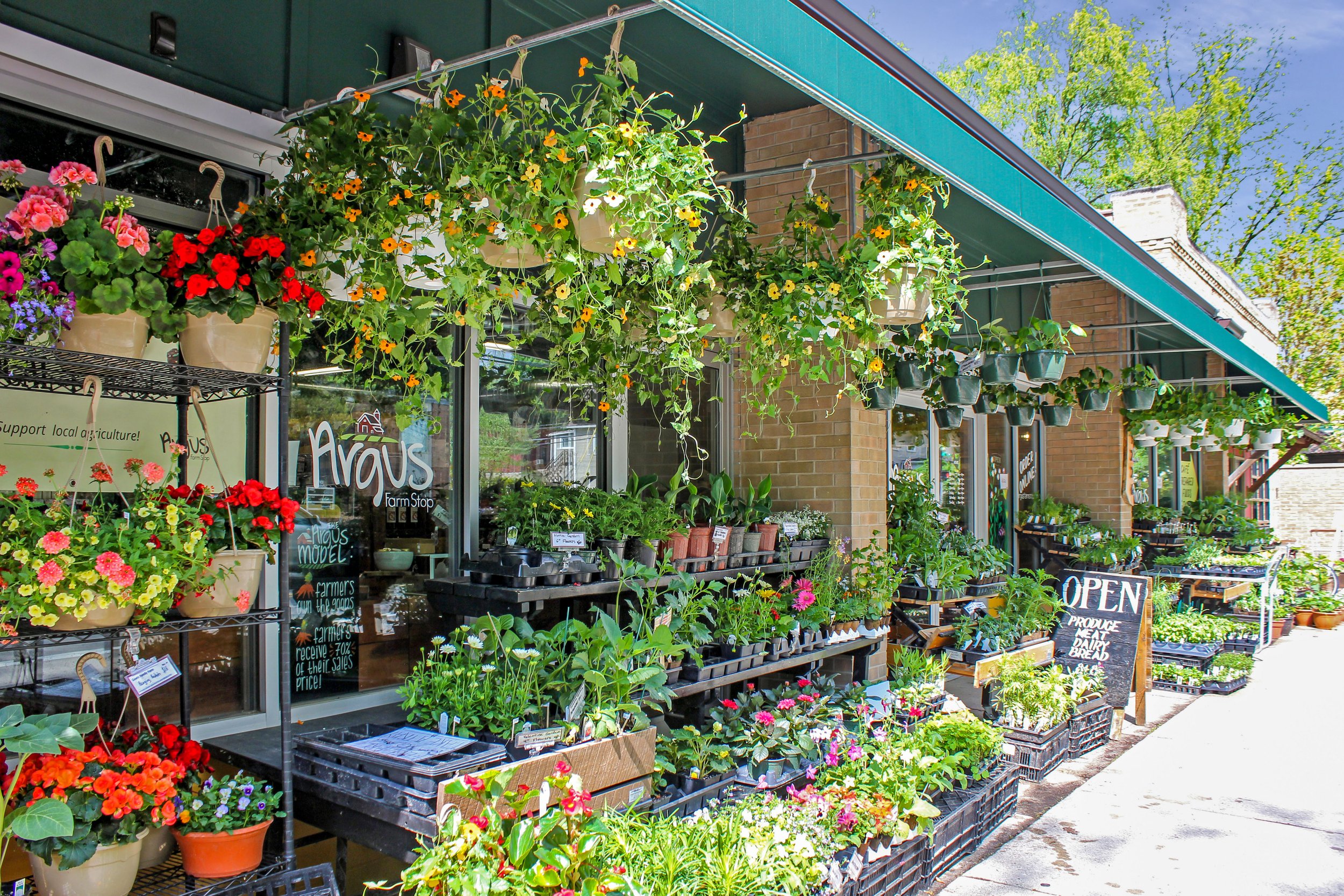
At Argus Farm Stop, consumers can learn about local food and put this knowledge into practice by directly contributing to the local food economy in one location. The Farm Stop sells local produce on a consignment model, ensuring that producers receive 70% of the profits for their goods. In contrast, traditional grocery stores operate at a much larger scale and use a strictly wholesale model, which pays an average of $0.15 for each dollar sold. The farm stop model keeps dollars spent in store in the local food system, directly supporting farmers and their businesses by caring for, merchandising, and selling farmers’ goods.
Locally sourced food is a more sustainable option for several reasons. It addresses issues of environmental sustainability by reducing shipping and transportation emissions for food products. Food shipped across the country, or even internationally, can account for a large portion of the emissions that are contributed by the agriculture industry. Even when using the same technology to transport goods, emissions from locally transported food remain lower simply because the distance covered for distribution is significantly smaller.
Additionally, locally sourced food contributes to a sense of community and to a resilient food economy by introducing capacity to respond quickly and comprehensively to changing circumstances and information. Under the consignment model, customers at Argus Farm Stop purchase directly from local farms, so the business knows exactly who grew what produce. This level of transparency cultivates trust between the farmer and the consumer, and makes it much easier to understand growing practices and trace produce back to its source in the case of concern.
In a recent blog post from Argus Farm Stop regarding the resiliency of local food, author Bella Martinez emphasizes the importance of locality, both in terms of emissions and maintaining quality: “Our farmers’ produce travels dozens, not thousands, of miles directly from the farm to our stores. Many deliveries arrive the same day the produce is harvested, preserving freshness while reducing handling throughout the supply chain.”
In addition to addressing environmental sustainability and carbon emissions associated with agriculture, a sustainable local food economy addresses needs in all parts of the food system. It creates economic viability for farmers, increases food access, cultivates regional resilience, and opens dialogue about what is important about your food and your farmer.
“Small, local farmers embody the spirit of "know your farmer, know your food" more than ever—even as many are reeling from federal grant cuts, rising fuel and input costs, and the broader uncertainty of an unstable world. Investment in infrastructure and capacity building for local and regional food systems, from farms to farmers markets, food stops to food hubs, can mean the difference between vulnerability and resilience…” says Amanda Maria Edmonds, the faculty lead for the U-M Sustainable Food Systems Initiative, in a recently published piece regarding the resiliency of local food.