Local Is Sustainable: Farm Stop Sustainability with A2Zero
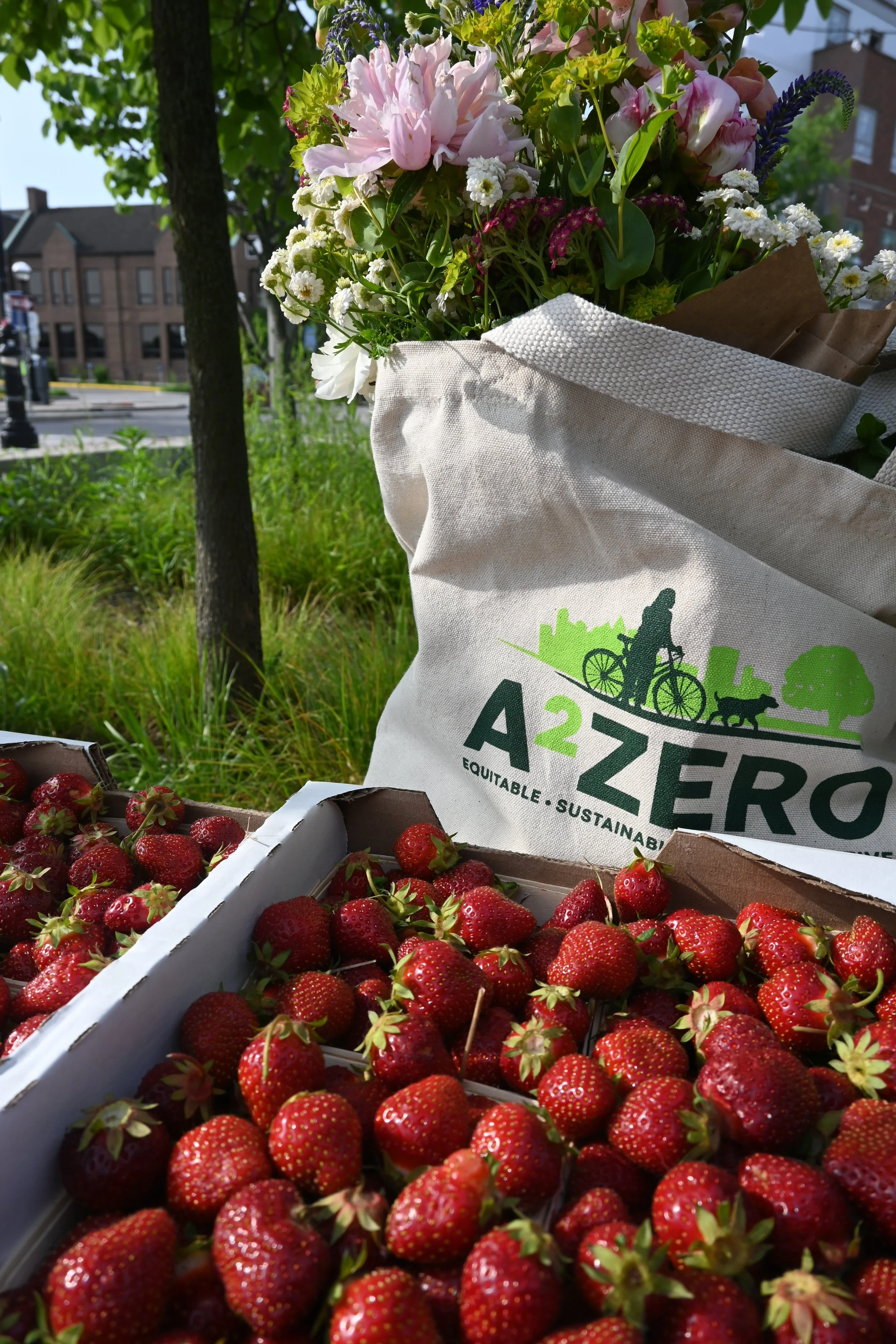
Images used with permission from the Ann Arbor Office of Sustainability and Innovations.
At Argus Farm Stop, our primary goal is to foster a thriving local food economy by supporting small, local Michigan farmers and increasing food access for our community. One key element in achieving this goal is collaboration with local organizations that prioritize food access and sustainability. A great example of such an organization is A2Zero, a program through the City of Ann Arbor focused on creating a climate action plan to achieve carbon neutrality by 2030. The plan includes a variety of sustainable solutions, one of which is rethinking how our communities approach food waste and consumption.
I recently spoke with Azella Markgraf, the Food Sustainability Coordinator for A2Zero, to discuss the sustainable practices Argus Farm Stop and the communities of Washtenaw County have implemented in an effort to combat climate change.
Launched in June 2020, the A2Zero climate action plan focuses on educating Ann Arbor residents and implementing community-wide sustainable practices through seven key approaches:
Powering grids with 100% renewable (solar) energy
Beneficial electrification — transitioning appliances to electric
Increasing energy efficiency by installing renewables on city buildings and homes
Reducing vehicle mileage through accessible public transportation
Decreasing waste through a “circular economy”
Building resilience for people and places
Prioritizing collaboration and equity
Azella’s role primarily falls under the fifth approach, the “circular economy.” The goal of this approach is to reduce waste by encouraging practices that “reuse, repair, repurpose, and reinvest.”
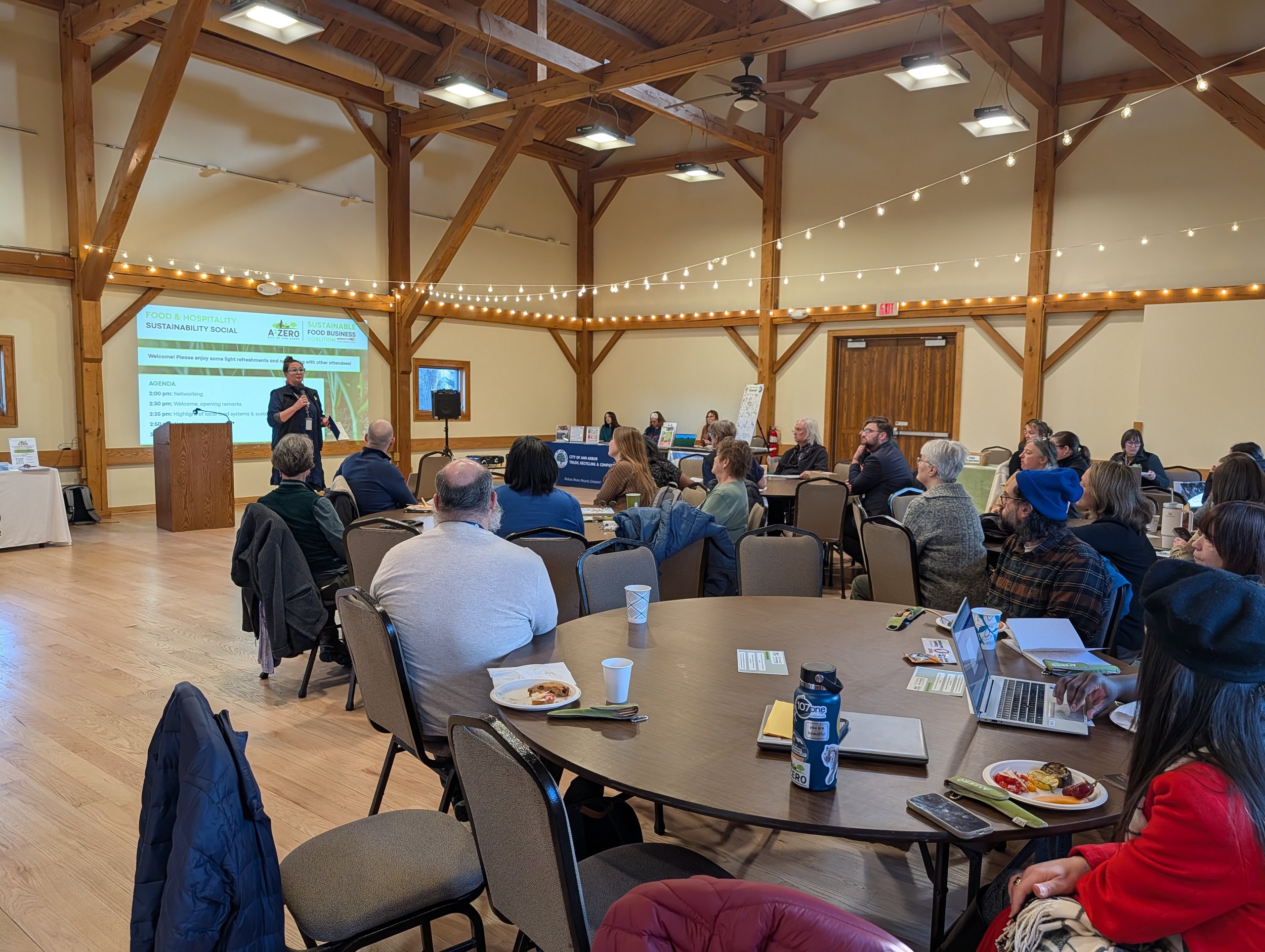
One unavoidable challenge of running a food business is the amount of waste it generates. Azella addresses this issue by leading the Ann Arbor Sustainable Food Business Coalition (SFBC), a network of local businesses and community organizations working together to implement sustainable food practices.
The SFBC, which began in 2024, encompasses 30-40 local businesses, including Argus Farm Stop. This collaboration is key in addressing food waste and building a more resilient local food economy.
Azella regularly meets with members of SFBC to discuss ways to reduce waste for local businesses. She also seeks to prepare businesses for food disasters by encouraging diversity in what produce local farms and businesses offer. As climate change accelerates, Azella emphasized that food disasters, like crop failures, will become more frequent. Through business collaboration and the adoption of sustainable food practices, we can lessen the impact of these challenges and ensure food security for our community.
Curtailing Food Waste: Small Food Systems Are More Adaptive
Argus Farm Stop is proud to be part of this effort. We currently implement several strategies to reduce waste, many of which are supported through Azella’s guidance. For example, Argus Farm Stop donates any produce fit for consumption but not fit for sale, to Food Gatherers, a local food bank that redistributes food to schools, hospitals, universities, and people in need throughout Washtenaw County. When produce is no longer viable for consumption, we compost it and share some of that compost with our neighbors, who use it to fertilize their gardens. Recently, we’ve started sending some of our compost to a Michigan resident who is starting his own farm in Ann Arbor.
Argus Farm Stop recently collaborated with the Environmental Consulting Organization at the University of Michigan (ECO-UM) to break down the difference in sustainability between major grocery stores and small, local grocers. ECO-UM found that Argus Farm Stop diverts 100% of its food waste. This means none of the food at Argus Farm Stop goes to a landfill. They looked at Kroger’s ESG report as a comparison. That report claimed 51.7% of food waste is diverted. Although Kroger composts about half of its produce, 48.3%, or approximately 45.892 tons of food sold at a Kroger store end up in a landfill each year. Azella notes that 40% of the entire food supply in the United States is thrown away annually.
The 51.7% of food Kroger composts each year is handled by off-site programs which vary by location, making it difficult to assess if and how the compost is used. At Argus Farm Stop, any compost not donated to neighbors or local farms is sent to My Green Michigan.
Local Food Generates Fewer Food Miles Emissions
In terms of transporting food, Argus Farm Stop releases far fewer CO2 emissions compared to major grocery chains. ECO-UM compared vehicle mileage and CO2 emissions between Argus Farm Stop and Meijer. While each Meijer store moves more product to many more people every year than an Argus Farm Stop location, the difference in emissions is staggering. Utilizing 170 trucks, Meijer drives 70,000,000 miles annually across 250 locations, averaging 280,000 miles per location. With their average truck producing 1.617 kilograms of CO2 per mile, 339,570 tonnes of CO2 are produced annually at each Meijer location from food miles.
With the distance from our local farms to Argus Farm Stop averaging under 50 miles, deliveries to Argus Farm Stop average 48,753 miles annually. Deliveries are usually made in smaller vans with more fuel efficiency, generating on average 450 grams of CO2 per mile. This gives us an average total of 22.2 tonnes of CO2 produced annually.
Based on these averages, a single Meijer location produces about 15,295 times more CO2 emissions per store than Argus Farm Stop from food miles. While these numbers are not exact and represent rough estimates, the final difference shows a massive gap in emissions between shopping locally versus a major grocery chain.
Local Farms Support Greater Biodiversity And Resiliency
In addition to reducing waste and greenhouse gas emissions, Azella emphasizes the importance of maintaining food diversity to create a strong local food economy. Local farmers and grocers like Argus Farm Stop are essential to helping the community weather food disasters. She shares an example of an apple orchard in Ohio, which once served as a reliable food source and third space for her local community. However, after years of harsh frosts, the orchard lost all of its crops, forcing the farm to close and leaving the community without a vital source of food.
This story illustrates the growing risks posed by climate change, which is increasing the frequency of natural disasters and extreme weather fluctuations. Azella stresses the importance of diversifying our food systems so that when disaster strikes, communities can remain food secure. At Argus Farm Stop, we support local farmers who prioritize diversity in what they grow, which helps ensure that Ann Arbor’s community will have food access despite extreme weather events and crop failures in the future.
Azella also collaborates with local farms, like Green Things Farm Collective, to achieve food diversity and sustainability. In collaboration with SFBC, local Michigan farmers are working to reduce or eliminate use of harsh fertilizers and pesticides, which create nutrient deficiencies in the soil, contaminate waterways, and reduce biodiversity in the environment.
ECO-UM examined the difference in sustainability between large and small scale farms. ECO-UM found that large scale, monoculture farming emits more greenhouse gases per hectare than small, diversified, organic farms. Small, diversified farms use “30-70% less synthetic fertilizer” than large farms and maintain “20-60% higher soil organic carbon with lower erosion rates.”
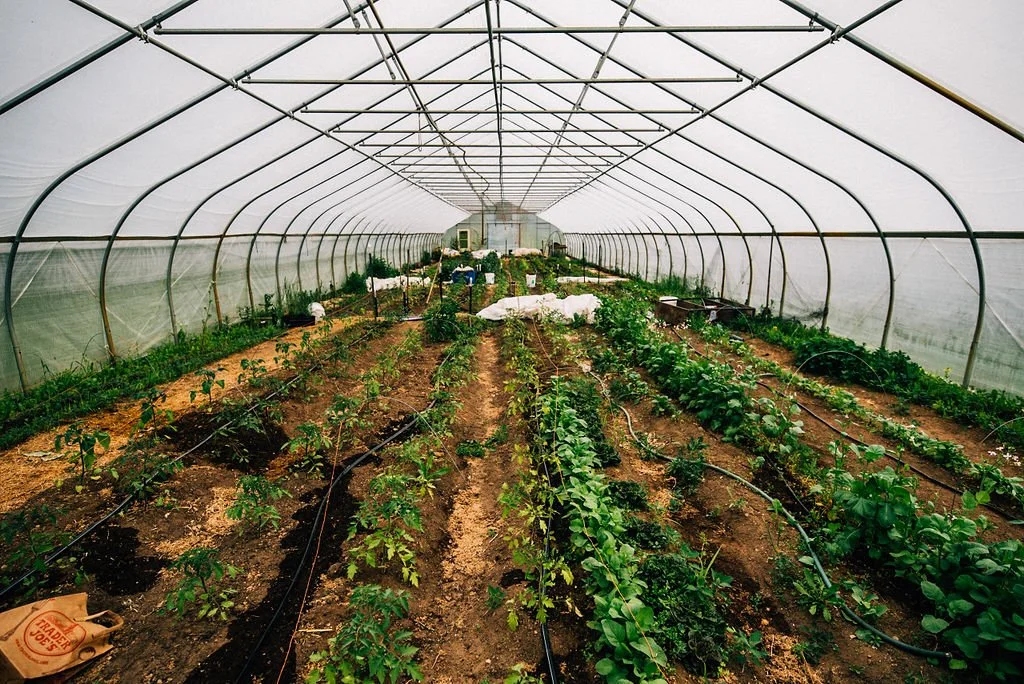
Overall, small farms are more water efficient, use less fossil fuels and pesticides, and in growing a variety of crops, maintain a biodiverse environment where “natural pollinators and beneficial insects” thrive. Unlike small farms, large monocultural farms also play a significant role in deforestation.
Azella points out that Michigan has an “abundance of local food producers that prioritize sustainable food practices.” Many Michigan farmers selling through Argus Farm Stop implement the sustainable practices mentioned in ECO-UM’s study, which benefits the environment and ensures long-term food security. Many have organic growing practices, avoiding pesticides and harsh fertilizers. Many of these farms also practice regenerative agriculture, which restores soil health and stores carbon. Some of these farms plant native crops to encourage natural pollinators on their farm, and practice rotational grazing, which is a method of cattle farming that aids in creating a biodiverse environment and mimics how cattle would naturally graze in the wild.
A significant number of these farmers have incredible diversity in what they are growing, offering a variety of produce in each season of the year. By doing this, local farmers are better prepared to feed themselves and their communities through climate disasters.
As much as local businesses and farmers are doing their part, consumers also play a critical role in ensuring food sustainability. Azella encourages the Ann Arbor community to make three key changes:
Shop Locally:
Buying from local businesses like Argus Farm Stop or the Ann Arbor Farmers Market helps support Michigan farmers and strengthens the local food economy. Shopping locally gives consumers an opportunity to directly connect with local farmers and know where and how their food is grown.
Shop with Purpose:
Reduce waste at home by making a grocery list before shopping, buying only what you know you will eat, and eating leftovers before purchasing more food. Being mindful of how much you consume reduces waste, creating a more food sustainable home.
Eat More Plant-Based:
Azella encourages people to make small, achievable changes in their diet. For example, if you typically have meat with each meal, challenge yourself to add several plant-based meals into your routine each week. Alternatively, you can commit to trying one new vegetable each week. Azella notes that these small changes have a greater long-term impact and likelihood of success than expecting people to transition to a completely plant-based diet. Over time, these small changes can make a significant difference in reducing waste and potentially lowering greenhouse gas emissions due to lower demand for meat products.
One significant advantage of eating a more plant-based diet is that it encourages people to think creatively when they cook. In the United States, it is typical for people to structure meals around a main protein—usually a type of meat. Adopting a more plant-based approach challenges us to think differently about food nutrition and how we structure our meals, encouraging us to try new produce and recipes. This benefits the environment while also expanding our palates and cultivating a deeper appreciation for different cultures’ cuisines.
Azella has already educated over 7,800 Washtenaw County residents on how to incorporate plant-based meals into their diets, and through A2Zero, she has donated 800 bags of plant-based food to the Ann Arbor community.
There are many ways to get involved in A2Zero’s climate action plan, from becoming an A2Zero ambassador to attending community events aimed at reducing waste. A2Zero currently hosts monthly clothing swaps at City Hall on the third Thursday of each month. They host various other events and workshops throughout the year.
If you're interested in becoming an ambassador or learning more about the A2Zero program, visit A2Zero Ambassador Program.
With the help of local programs like A2Zero and the Sustainable Food Business Coalition, Argus Farm Stop is proud to contribute to a strong, sustainable local food economy that diverts food waste and increases food access for the communities of Southeast Michigan.
For more details on the A2Zero climate action plan, visit A2Zero’s website.