
The holiday season is a time for friends and family to come together over delicious meals. It is a time when winter produce takes center stage, with winter squash being a holiday favorite. I recently spoke with Richard Andres, founder and owner of Tantré Farm, about his winter squash and growing practices. Tantré Farm is one of our biggest suppliers of winter squash, supplying us with at least seven wonderful varieties throughout the fall and winter.
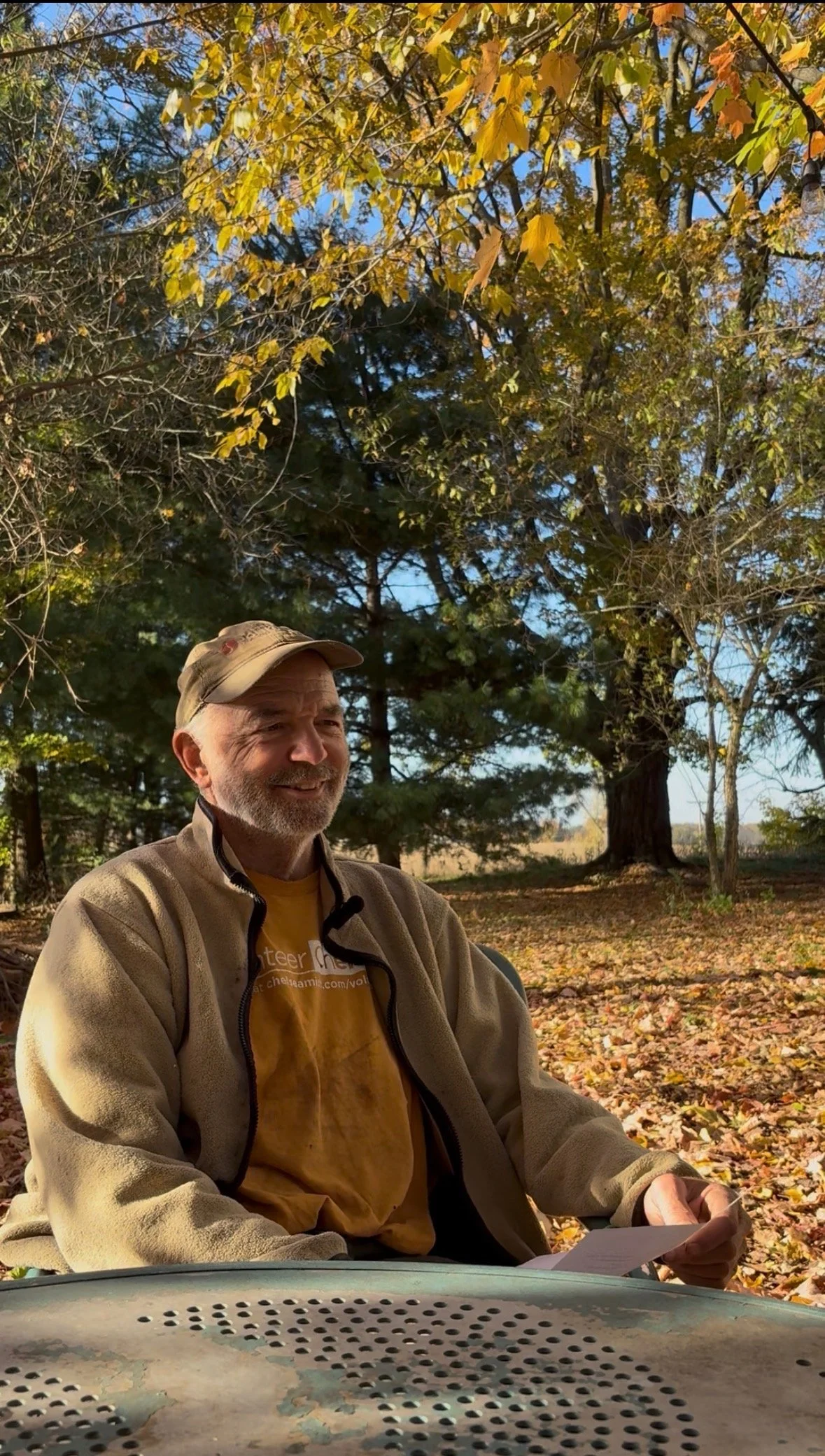
Tantré Farm was founded in 1993 by Richard Andres and his wife, Deb Lentz. Richard and Deb were experienced farmers before starting Tantré Farm, where they initially grew a few staple crops like potatoes, peppers, squash, and melons.
Richard was also a carpenter at the time he started Tantré Farm.
“I was used to building everyone else’s dream, and thought it’d be nice to build my own dream.”
He and a few friends began building a house in Chelsea, Michigan. Within a year, Richard and Deb bought 40 acres of land by their newly-built home and began farming.
The farm has since grown to 150 acres and grows over 100 varieties of produce, along with herbs, mushrooms, and flowers. Tantré Farm distributes these among local markets and restaurants throughout Michigan, including Argus Farm Stop.
In 2001, Richard and Deb began offering Community Supported Agriculture (CSA) boxes. Today, Tantre Farm offers more than 400 people participate in its CSA program, including Fall and Thanksgiving shares. Richard describes the Thanksgiving CSA as the “last hurrah” before winter. He and his team deliver around 120 Thanksgiving CSAs each year to people’s porches.
“I was used to building everyone else’s dream, and thought it’d be nice to build my own dream”
Richard grows many varieties of winter squash, including acorn, butternut, Georgia candy roaster, delicata, kabocha, carnival, honeynut, hubbard squash, and more. Each of these varieties is available at Argus Farm Stop and has a unique flavor profile, from mild and nutty types like the acorn to sugary types like the Georgia candy roaster or honeynut squash.
For anyone new to squash, Richard recommends pumpkins and acorns as “gateway squash.” Richard did not like winter squash himself until he had acorn squash. He recalls a memory of him and a friend roasting an acorn over the fire with walnuts and a little maple syrup. That experience endeared him to it, and he now prepares many varieties of squash in different ways to share with family and friends on the farm.
For those who have had some winter squash but want to expand their palettes, there are many rarer varieties Richard recommends.
“Kabocha is dry and sweet. When we were kids, we had our fill of all kinds of candies, but we really liked halva. The kabocha reminds me of that.” It is perfect for roasting or enjoying in soups. Richard’s favorite way to eat kabocha is in a honey, paprika, and prosciutto soup—a recipe he got from fellow farmer Norma Green.
The butternut is one everyone likes. It is versatile and easy to peel. Honeynuts are similar, but with more caramel flavor. Both make great substitutes for pumpkin in pumpkin pie.
Richard also grows larger varieties, like the Georgia candy roasters and hubbard squash. The Georgias are sweet and very fine with a bean-paste texture. Richard describes them as a “confection”—it is delicate and great with apple cider. The hubbards are “large and intimidating, but one of the most delicious.” Once cured, they are similar in texture and taste to pudding.
These larger varieties can be stored long term by keeping them in a cool place and cutting off only what you need for each meal. Richard stores his on his front porch during the winter. Smaller varieties can be chopped and kept in the freezer for long term storage.
All of Richard’s produce is grown with an emphasis on regenerative agriculture. Although they are no longer USDA-certified, Richard and Deb maintain organic growing practices. They do not use insecticides, herbicides, or pesticides. Instead, they use composted manure and sterilized poultry manure to maintain soil fertility.
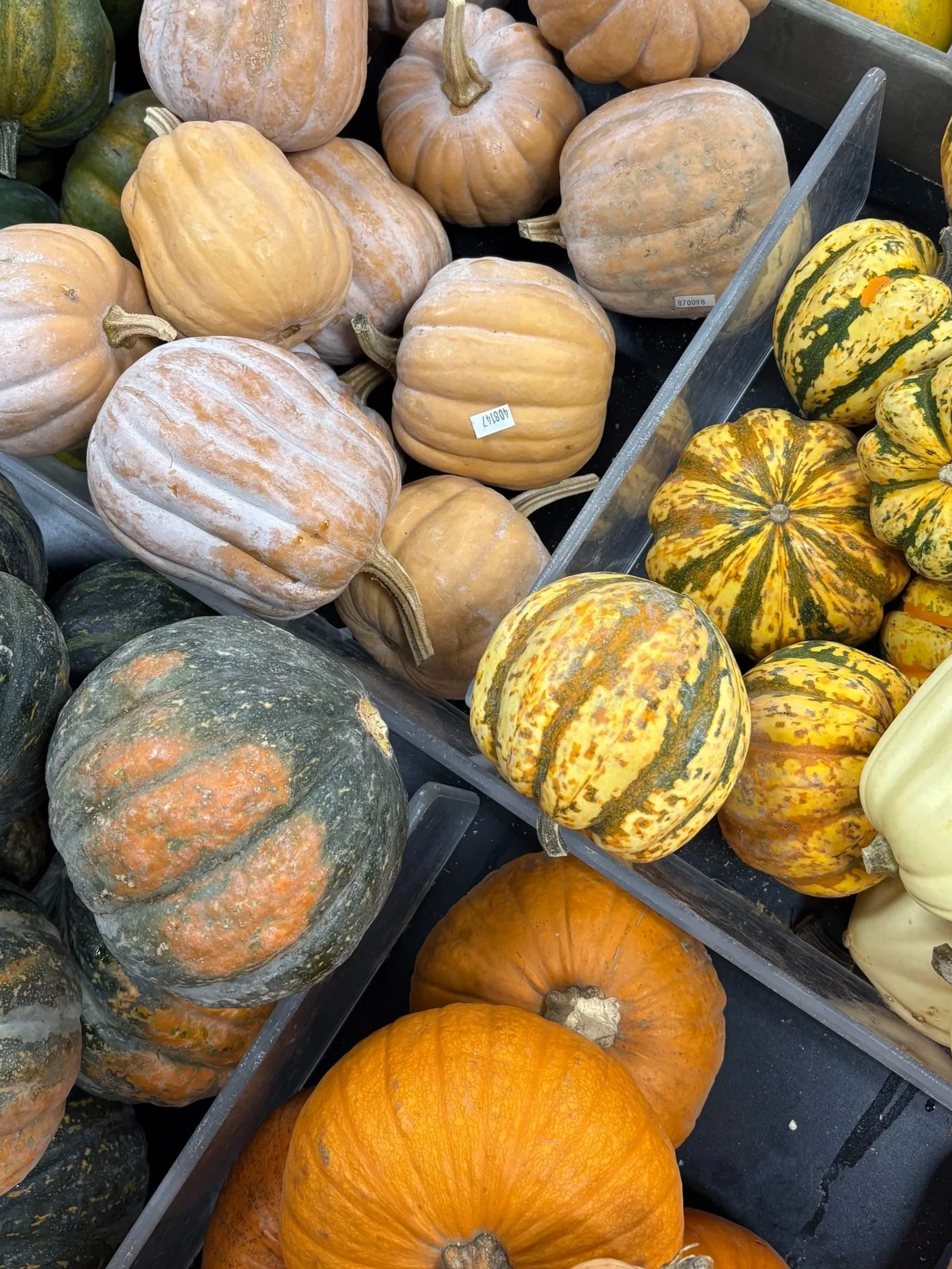
Since Richard’s practices are organic, he is not bothered by produce that has small bites from insects or birds. Richard notes that our culture around food has shifted a lot over the years. Many people now expect food to be “sterilized” and picture-perfect when put on the table, and they are experimenting less with fruits and vegetables as a result.
“There’s something good behind getting a little rugged with your diet—expanding your adventurousness.”
Food grows outdoors and is always subject to the elements of nature. When we eat food that appears imperfect, we prevent food waste and help shift the culture regarding food consumption toward one that prioritizes food access and sustainability.
Once produce is unsalvageable, Richard encourages consumers to compost it at home. Richard feeds any old squash he has to the pigs and cows on the farm.
Tantré Farm practices rotational grazing, which is the process of moving animals to different areas of a farm to graze and fertilize the soil. All 30 cows at Tantré Farm are currently eating through Richard’s squash and corn fields before they over-winter on a neighboring field with bales of hay.
Employees of Tantré Farm live on the farm and share meals together. Deb runs educational programs that allow children across Michigan to visit the farm and learn about produce.
“Buying local produce can also make the difference between a good and a great holiday meal, since many local farmers like Richard grow more varieties of produce that are richer, sweeter, and overall have more depth of flavor than what you’d typically find in a traditional grocer.”
All of this is in an effort to build community and raise awareness of sustainable growing practices, Michigan’s native fruits and vegetables, and why it is important to know how to grow your own food.
Winter squash plays a significant role in the farm’s regenerative practices. In late spring, Richard plants squash over plowed cold season grasses, which are hard for farmers to get rid of. Once planted, the squash rapidly takes over, breaking down the nutrient-rich grasses and consuming their potassium.
Richard plants winter squash from the last week of May into the third week of June. By the summer solstice, squash “runs” all over the field, growing into late summer. As Richard describes it, “The squash grows easily, monstrously, and abundantly.”
By early fall, Richard starts bringing the squash in to store in root cellars and storage barns over the winter. He distributes them through various avenues, including Tantré Farm’s CSA subscription, Argus Farm Stop, the Ann Arbor Farmers Market, and Agricole Farm Stop, among other markets.
Having multiple channels to sell through, such as Argus Farm Stop, makes a huge difference during the slower winter months. Much of a local farmer’s fall and winter sales come from produce sold around holidays like Thanksgiving and Christmas.
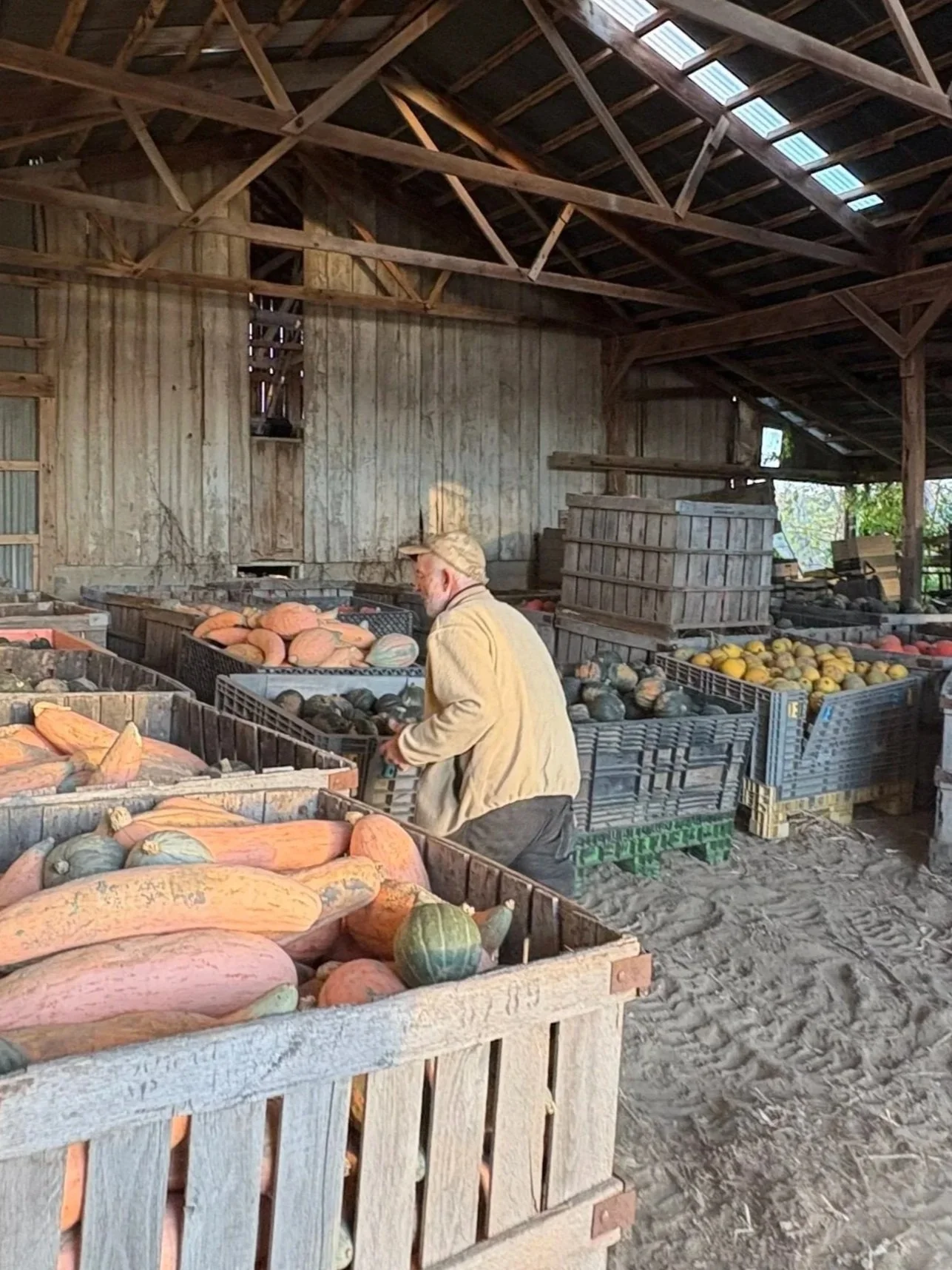
Richard notes that produce is harder to sell during cold months. Channels like Argus Farm Stop ensure that “more produce is being put out” instead of sitting in root cellars all winter. When enough people buy turkeys, squash, sweet potatoes, and other cured vegetables from a small, local farmer, it helps them maintain a stable income through the winter.
Buying local produce can also make the difference between a good and a great holiday meal. Local Michigan farmers like Richard grow varieties of winter squash that are richer, sweeter, and more complex in flavor than what you would typically find in a traditional grocery store.
If you are interested in learning more about Tantré Farm’s winter squash, growing practices, or CSA shares, you can visit their website here.
You can find Tantré Farm’s winter squash at Argus Farm Stop this Thanksgiving, along with other delicious fall produce and local turkeys from Webbed Foot Pines, Ernst Farm, Sunnyside Organics, and Harnois Farm. If you are interested in pre-ordering your Thanksgiving turkey from Argus Farm Stop, visit our website here.