
Let Local Food Fuel Your Studies: Cooking For College Students
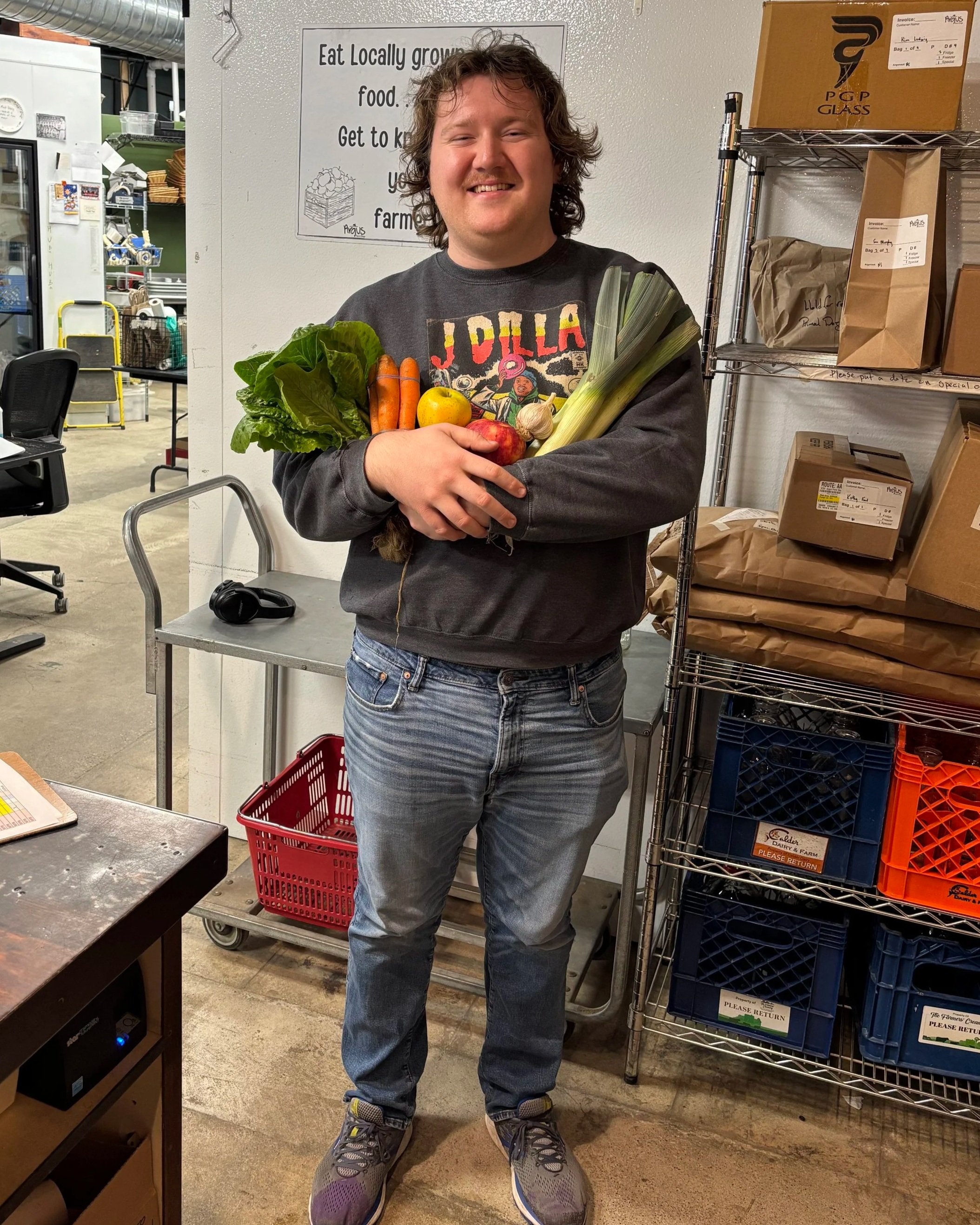
Every college student knows the eternal struggle of adulthood: finding something to eat. And the kicker? You have to do that several times a day for the rest of your life! Each week, you journey to a grocery store, see the insane cost of groceries once you’re there, struggle to find the time to prep ingredients, and cook a well-balanced meal. All of this we now have to balance on our own without much guidance, which can make something as simple as eating seem exhausting! Not to mention the fact that big grocery stores and industrial food processing companies pay farmers next to nothing for food, treat animals horribly, overwork the soil, and make record profits while hiking up prices.
Enter Argus Farm Stop. Argus Farm Stop is a fusion between a farmer’s market and a grocery store, working with local farmers directly to source fresh produce, humanely raised meat, daily baked bread, and much more. Argus Farm Stop’s mission is simple: we grow the local food economy by connecting shoppers directly to local farms. I love the idea of going to a farmer’s market, but Saturdays are one of the only days I get to sleep in, so I often miss the limited window to visit. Also, Michigan winters are no joke, and the thought of being outside in the snow to get my food is hard to overcome. Argus Farm Stop offers a year-round, farmers market style experience with anything from carrots and apples to chocolate milk, chips, meat, and beer. Farmers set their own prices, which means that while major grocers increase prices to scrape you for every penny you have, the cost of goods at Argus Farm Stop is fair, meets farmers’ needs, and goes directly to them, not the middlemen. Sometimes, items like potatoes or a pack of tortillas are comparable to or less than grocery store prices! Argus Farm Stop has three locations that are all walkable from University of Michigan’s campus, and both offer a variety of excellent coffee and tea beverages to satiate that caffeine addiction.
I know that cooking meals at home is daunting to many college students. Argus Farm Stop also has answers to this dilemma. For starters, they offer a variety of prepared meals that you can grab on the go and throw in the microwave. They’re better and cheaper than what you often find on food delivery apps, and quite convenient when you don’t have reliable access to a kitchen. For those keeping track of their macros, Argus Farm Stop has high-protein foods, including fresh and frozen meat, yogurt, and beans. And honestly, cooking can be really fun. Argus Farm Stop receives a lot of unique and interesting items that come into the store that I have never heard of, and I love the challenge of figuring out how to cook with them. For me, the easiest way to make sense of cooking was not by learning complex recipes, but to understand techniques that can be built upon using whole local ingredients.
For example, many cuisines have vegetables that are used to form a flavor base for dishes. These vegetables vary from culture to culture, but the most common are known as a mirepoix, soffrito, or holy trinity. Usually, they are composed of some combination of carrots, onions, celery, garlic, or bell pepper. They can be used for anything, whether you are trying to pack more vegetables into a simple recipe or make full meals, like jambalaya and spaghetti bolognese. Do you know what is almost always in stock year-round at Argus Farm Stop? Some combination of carrots, onions, celery, and garlic. Even when something like garlic might not be in season, the staff can recommend a good substitute. For example, during springtime, the bulbs of garlic grow a long, green stem called a scape that has a similar flavor. When celery is not in season, the shelves are often lined with celeriac, or celery that has been bred for a large root instead of a stalk, which can have many of the same applications.
Throughout my writing here, I’ve mostly focused on the individual shopping and cooking experience. But no person is an island: even the most menial of actions, like buying groceries or making a meal, can have an effect on the community around us. At Argus Farm Stop, that effect can be far more positive than with an absent-minded relationship to food consumption. Argus Farm Stop has returned over $30 million directly to farmers in Michigan. That’s a significant impact, especially when farmers only receive approximately 15 cents per dollar spent at major grocery stores. In light of recent cuts to SNAP, Argus Farm Stop shoppers raised over $16,000 to give those in need access to produce. That’s your shopping actually making an impact on your community. So the next time you’re unsure of what to get for dinner, take a quick walk to Argus Farm Stop and see what you can come up with. I promise it will make a difference.
Check out some simple ways to use winter veggies at Argus Farm Stop for some flavorful and healthy bases from our farm stop dietitian Mary Balog!
————————————————————————————————————————
Veggie Recipe Template
Vegetables (choose 1–2):
Beets, Bok Choy, Cabbage, Carrots, Celeriac, Kohlrabi, Mushrooms (Trumpet, Oysters, Maitake, etc.), Onions, Parsnips, Potatoes (Sweet potatoes, Yukon Gold Potatoes, Blue Potatoes, etc.), Rutabaga, Sunchokes, Turnips, Watermelon Radish, Winter Squash (Butternut Squash, Tetsukabuto, Honeynut, Autumn Frost, etc.)
Stovetop Method:
Wash, peel, and chop vegetables into bite size pieces. In a pan on the stovetop, sauté chopped vegetables in a neutral oil (like canola oil or olive oil) until just tender.
Combine sauce ingredients and add to the pan with the vegetables. Cook 2-3 minutes, or until the vegetables are fork-tender. Add 2-4 tbsp water or broth if you want a more saucy liquid.
Oven-Roasted Method:
Wash, peel, and chop vegetables. Combine sauce ingredients. Toss vegetables with the sauce along with an additional 1 tbsp neutral oil (like canola oil or olive oil).
Spread veggies into one layer on a baking sheet (can line with foil for easier cleanup). Roast at 425°F, stirring once halfway through roasting. Roast for 25-35 minutes, or until vegetables are fork tender.
**Note: Peeling veggies is not always necessary. Not doing so can save time on prep and also provides additional fiber, vitamins, and antioxidants. However, the rough and bumpy exterior of a celeriac may be less enjoyable to eat than the thinner skin of a potato. Some winter squash also have inedible skins. Use your judgment or ask an Argus staff member for advice with less familiar produce!
1. Sesame & Soy
Ingredients:
1 tbsp sesame oil
1 tbsp soy sauce
1 tbsp rice vinegar
1–2 tsp honey or maple syrup
Finish with toasted sesame seeds, lime juice, or chopped scallions
2. Maple Dijon
Ingredients:
2 tbsp maple syrup
1 tbsp Dijon mustard
1½ tbsp olive oil
1 tbsp apple cider vinegar
Salt & pepper
3. Garlic-Herb
Ingredients:
1 tsp dried garlic
½ tsp dried rosemary
½ tsp dried thyme
2 tbsp olive oil
1 tbsp lemon juice
Salt & cracked black pepper
Finish with a squeeze of lemon juice after cooking
4. Smoky Paprika
Ingredients:
1 tsp smoked paprika
½ tsp cumin
½ tsp garlic powder
2 tbsp olive oil
1 tbsp balsamic vinegar
Salt, chili flakes to taste
Drizzle with extra balsamic vinegar after cooking