
Chestnuts and Hazelnuts in Michigan: Vicary Road Farm
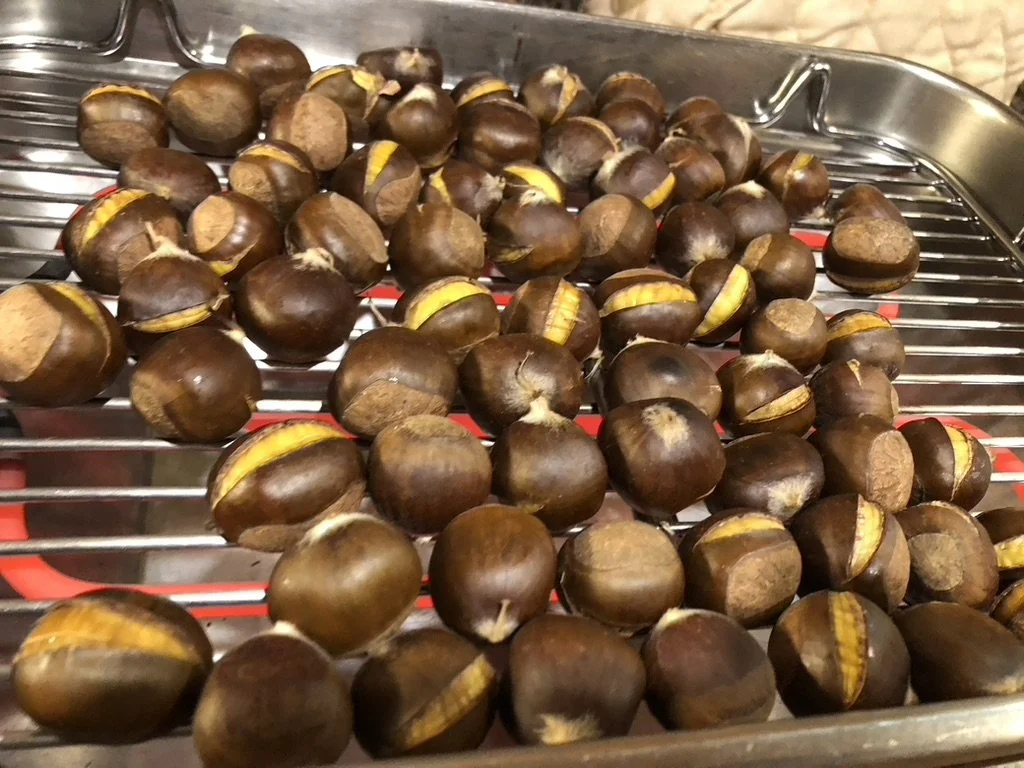
As we near the end of the year, people across Southeast Michigan prepare for the holidays by crafting gifts and making plans to see loved ones. Locals gather ingredients to prepare classic, cozy dishes, and kitchens across the country fill with the aroma of roasted hams, turkeys, and freshly baked pies. This winter season, bring something local to your dinner table with two underrated holiday staples: Michigan-grown chestnuts and hazelnuts.
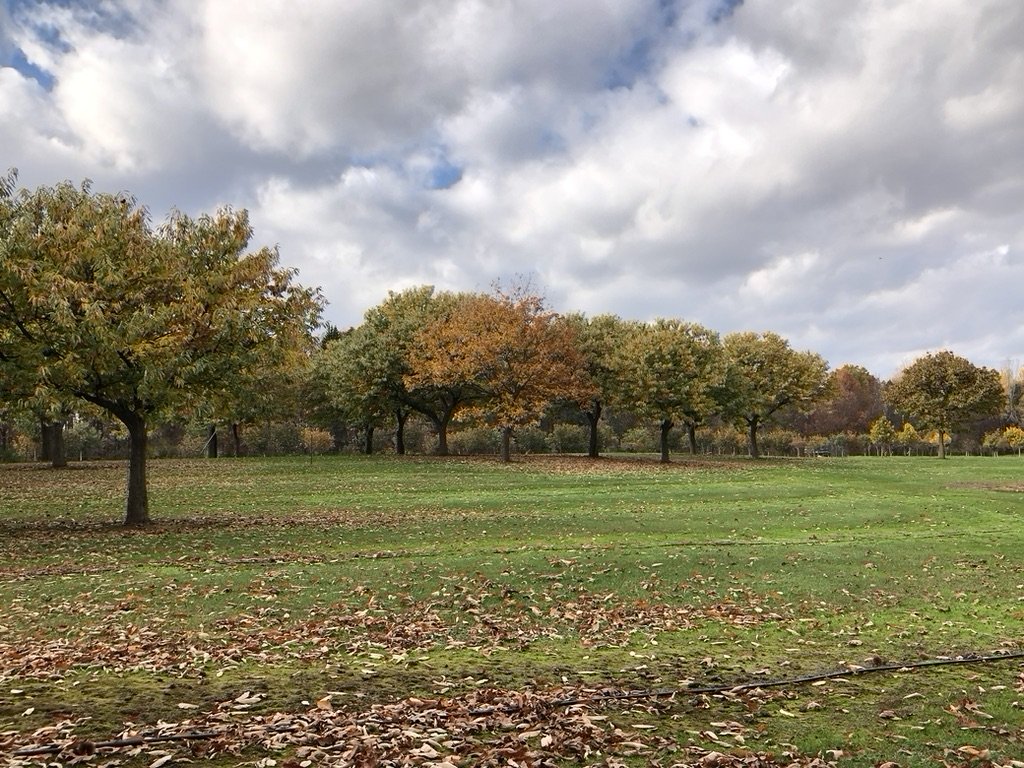
At Vicary Road Farm, located in Southeast Michigan, Virginia Rinkel and her husband grow a wonderful variety of chestnuts and hazelnuts. The chestnuts are delivered to the cooperative they belong to, Chestnut Growers, Incorporated. Virginia told us all about how Vicary Road Farm got started, the nature of chestnut and hazelnut farming in Michigan, and how CGI operates.
Virginia and Bob Rinkel, both former elementary teachers, initially began their journey as tree nut farmers as a retirement project twenty-five years ago. They also grew up surrounded by agriculture. Virginia’s husband grew up in a farming family in Southern Illinois. Virginia grew up in a family of farmers and ice cream makers. “My dad had 600 apple trees, but I didn’t really want to do apple trees later in life,” Virginia shared. The day her dad passed away, there was a notice in the Lansing newspaper of the Northern Nut Grower’s Annual Meeting coming to Michigan State University (MSU), which Virginia took as a sign. “I looked at my husband and said, I guess we gotta go.”
There, Virginia and her husband met Dr. Dennis W. Fulbright (recently deceased), a plant pathologist at MSU, who helped spark their passion for tree nut farming. Virginia and her husband now continue their family’s agricultural legacy, while taking their own unique path by growing tree nuts instead of fruit.
Today, the Rinkel family has approximately seventy-five chestnut trees and eighty hazelnut trees spanning three fields on their local farm. There used to be 300, but chestnuts don’t like “wet feet” and many died being planted in low ground. They currently grow one variety of chestnut tree and over four varieties of hazelnuts. All of these nuts are harvested over the span of a few weeks in the fall, when they are at their freshest and sweetest, so that those across Washtenaw County can enjoy them.
It takes a lot of consideration and research to figure out what varieties you want to grow as a tree nut farmer in Michigan. In 1904, the 4 million American chestnut trees, from Maine to Georgia, were nearly wiped from existence due to a fungal blight called Cryphonectria parasitica.
That left Michigan growers with two non-native varieties to choose from: the Chinese chestnut or the European-Japanese hybrid. The different pollen that comes from these two types of cultivars harm each other, causing Internal Kernel Breakdown (IKB) - better known as “Brown Rot”, which was discovered at MSU some years ago. This means farmers cannot grow both varieties in proximity to one another, and left to choose from one of the two varieties. The Rinkel family opted for the European-Japanese hybrid, though they also have a lone favorite Chinese chestnut tree and its pollinator that sit away from the main orchard providing a few American-Manchurian nuts.
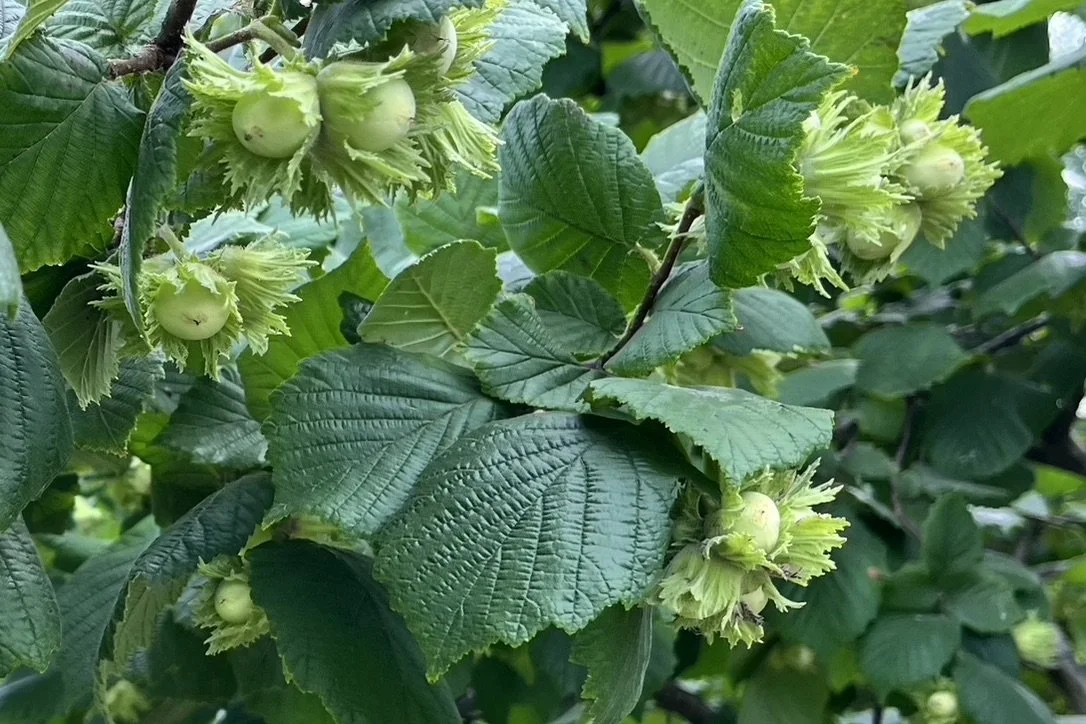
Virginia had more freedom when it came to choosing which hazelnuts to grow. She opted for four of Oregon State University’s released cultivars, which are as follows: McDonald’s, Webster, Felix, and Yamhill (the latter is used in Ferrero Rocher chocolates). More recently, she’s been excited to be a small test plot for Rutger’s Eastern Filbert Blight (EFB) resistant hazelnut trees under direction of Dr. Tom Molnar’s research. These varieties are as follows: Raritan, Somerset, Monmouth, and Hunterdon. There will be 5 new named varieties released under Dr. Molnar’s direction this coming spring of 2026. Hopefully, these EFB-resistant hazelnut trees will encourage more Michiganders to plant hazelnuts, as they are native to Michigan.

As far as what it takes to grow chestnuts, it is “very intense for small growers.” This can be taken quite literally, as Virginia is only 5’3, and chestnut trees can get up to 50 feet tall, so she does her best to spray from the ground up. Virginia and her husband recently invested in hiring a real helper, a drone spray and its flight manager. The drone hovers 10 feet above the trees from the top down, and sprays pesticide from the top of the tree down to its roots. This works wonders in eliminating weevil, a common pest for chestnut trees. Fertilizing is less labor-intensive, since they only have to fertilize the trees twice in the spring.
When the chestnuts are harvested in the fall, they are immediately put in the Rinkel’s walk-in refrigeration unit. Unlike hazelnuts, chestnuts need to be stored at a lower temperature in order to keep well.
Virginia will then send them to be inspected by Michigan’s largest co-op, Chestnut Growers, Incorporated. Here, a few of the nuts are put in a warm room so that any weevils will exit the nuts and are trapped in a vertical-sided cookie-sheet. The number of weevils are counted, and the grower will be alerted that preventative action needs to be taken the next year to be sold through the cooperative. If there are no weevils, the nuts can be cleared to sell.
Hazelnuts are easier to grow, though still labor-intensive. They do not need to be refrigerated once harvested, so they sit in a ⅜” welded wire enclosed squirrel-proof house unit to dry outside until ready to sell. After approximately six weeks, they are ready to be sized and sold. The biggest concern during this process is ensuring squirrels don’t get to them!
As a part of the Chestnut Growers 35-member co-op and the community of Michigan farmers as a whole, Virginia and her husband work hard to ensure the highest quality chestnuts and hazelnuts are delivered from their farm to local farmers’ markets and consumers. The result of her and her husband’s hard work is apparent, since no tree nut you find in any major grocery store remotely compares to the sweetness and decadence of their locally grown chestnuts and hazelnuts.
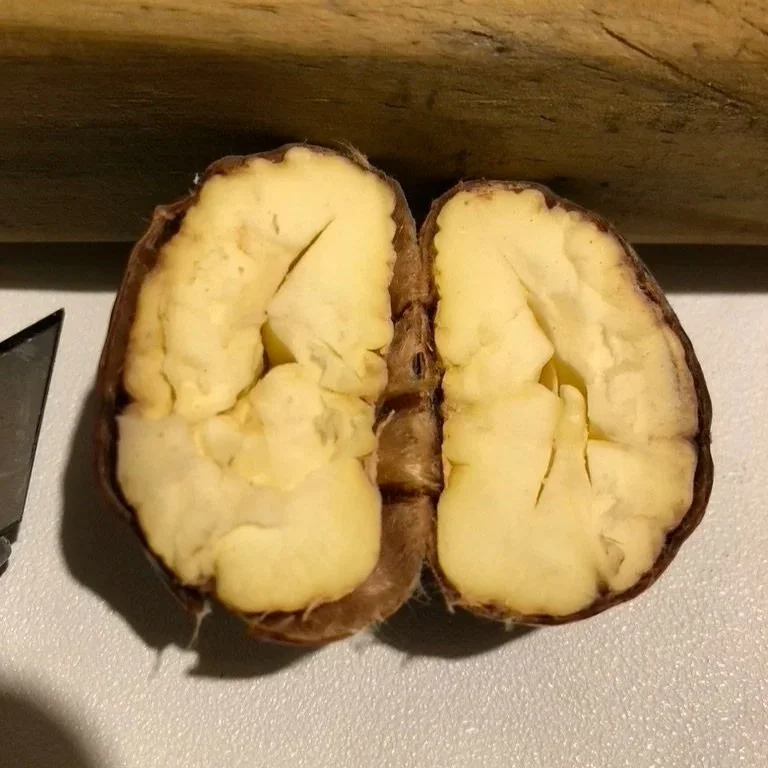
Chestnuts and hazelnuts are also quite versatile. Virginia personally enjoys chestnuts best when they are simply roasted, though she sometimes uses them in her chestnut stuffing recipe. Hazelnuts, specifically the Yamhill variety, are “very sweet and tasty,” and can be used to make a hazelnut spread or crumbled throughout seasonal desserts. If their flavors weren’t enough, “chestnuts are also incredibly healthy, and high in vitamin A, E, and C.”
If you are curious to know how to roast chestnuts, it’s fairly simple. Virginia suggests you do the following:
Lay the flat side of the chestnut’s shell on a cutting board against the counter.
Using a sharp knife, score into the top of the chestnut’s shell. If you don’t do this step, the chestnut will explode in the oven or microwave!
Roast on a cookie tray in the oven, with a separate pan of water alongside (to keep them from drying too much).
Alternatively, you can cut the chestnut in half using a pex-pipe cutter, then boil them in a large pot of water. To remove the shell and pellicle, take them out one at a time once completely boiled (otherwise, the shell will cool down and shrink around the nut, and you’ll have difficulty separating the two).
One last method Virginia recommends is scoring and grilling them. If you do this method, be sure to use an old padded glove to move them around occasionally, so they don’t burn.
Whether you are looking for a new nutritious snack to try, or if you’re curious to add something fun to your holiday dishes, consider buying locally grown chestnuts and hazelnuts this winter. You can find the Rinkel family’s raw and in-shell roasted hazelnuts at both Argus Farm Stop locations. The CGI co-op sells their chestnuts at many locations including Meijer, but you can buy direct from them online through the CGI “Store”.
Checkout chestnut and hazelnut recipes from our Farm Stop Dietitian Mary Balog below!
————————————————————————————————————————————————————————————————————————
Oven-roasted Chestnuts
Ingredients:
1 lb fresh chestnuts, rinsed and dried
Water (for blanching)
Directions:
Preheat oven to 425 °F.
Score the chestnuts using the safety tip below.
Blanch the scored chestnuts in boiling water for 30 seconds. Drain and dry them.
Place chestnuts “X”-side up in the baking sheet. Roast 25–30 minutes, until shells start curling away. Add a pan of water to the oven to prevent over drying of the nut.
Transfer chestnuts to a cutting board and cover loosely with a kitchen towel. Let rest until cool enough to handle. Peeling is easiest while still warm.
Peel the chestnuts. Remove shells and inner skins. Use a paring knife if needed.
Best enjoyed warm! You can toss the shelled, roasted chestnuts into melted butter with savory seasonings -or- cinnamon sugar for added flavor. Or mix plain, roasted chestnuts into rice dishes, soups, and pastas, or chopped up in salads, desserts, and baked goods for extra warmth and texture.
Safety Tip:
Place a damp kitchen towel on your work surface.
Put a plastic bottle cap on the towel, then place the chestnut on the cap. (I used a Calder’s milk bottle top just fine!)
The towel prevents slipping, and the cap stabilizes the nut. Keep fingers clear of the cleaver.
Using a kitchen cleaver, carefully cut an “X” on the rounded side of the chestnut. Alternatively, you can also just make one slice horizontally across the width of the rounded side of the chestnut. One slit will still allow for easy peeling, though an “X” is a more traditional technique.
Storage:
Refrigerator: Store in an airtight container for up to 5 days. Reheat gently in the oven before serving.
Freezer: Chestnuts freeze well. Peel, place in an airtight freezer bag, and freeze for up to 3 months. Thaw overnight in the fridge before reheating.
Oven-Roasted Hazelnuts
Ingredients:
1 cup raw hazelnuts
Optional: 1 tablespoon olive oil or butter. (If you plan to season (with salt, spices, oil, etc.), adding a bit of oil or butter before roasting can help the seasonings stick)
Note: You'll need a good quality nutcracker to break the shell and remove the nut. When you remove the soft nut from the shell, it will be covered in a bitter, dark brown paper-thin skin that will be removed through the cooking process.
Directions:
Preheat oven to 350 °F.
Once you remove the outer shells of the hazelnuts, spread them in a single layer on the prepared baking sheet.
Roast until golden brown and fragrant, about 10–15 minutes, stirring occasionally to ensure even toasting.
As soon as they come out, wrap the hot hazelnuts in a kitchen towel, let them steam for about 1 minute.
Use the towel to rub the hazelnuts, removing loose papery skins. It’s fine if some skin remains. Most will come off with rubbing.
Let the nuts cool completely before storing or using.
Roasted hazelnuts are great for snacking, sprinkling on top of salads, blending into pesto, folding into baked goods, or topping yogurt, oatmeal, and desserts. If you love chocolate, you might also want to look up a homemade “Nutella” (chocolate hazelnut spread) recipe!
Storage:
Because hazelnuts are high in fat and can spoil quickly, do not store them in the pantry long-term if they are not vacuum sealed.
Refrigeration or Freezing: Store raw or roasted hazelnuts in an airtight container or freezer-safe bag. In the refrigerator: they stay good for many months; in the freezer: for up to a year (or more).
Sources: Adapted from Serious Eats, Leslie Beck RD blog, Culinary Hill