Extending Michigan Farming: Farming for Winter with Norm Holtz
We may feel inclined to believe that for local farmers, winter signifies a period of quiet, rest, and preparation for spring’s growing season. This is often far from true. Storage crops make up a significant part of a farmer’s fields and keep a paycheck coming back to them through the frost-ridden months. Storage crops, which are crops that can be cured and stored long-term, are widespread in our diet and have kept people fed for generations because of their ability to keep through winter. Farm stops also play a significant role in keeping us fed through these cold months, allowing local farmers to sell these crops year-round, and amplifying local produce when many have forgotten about it.
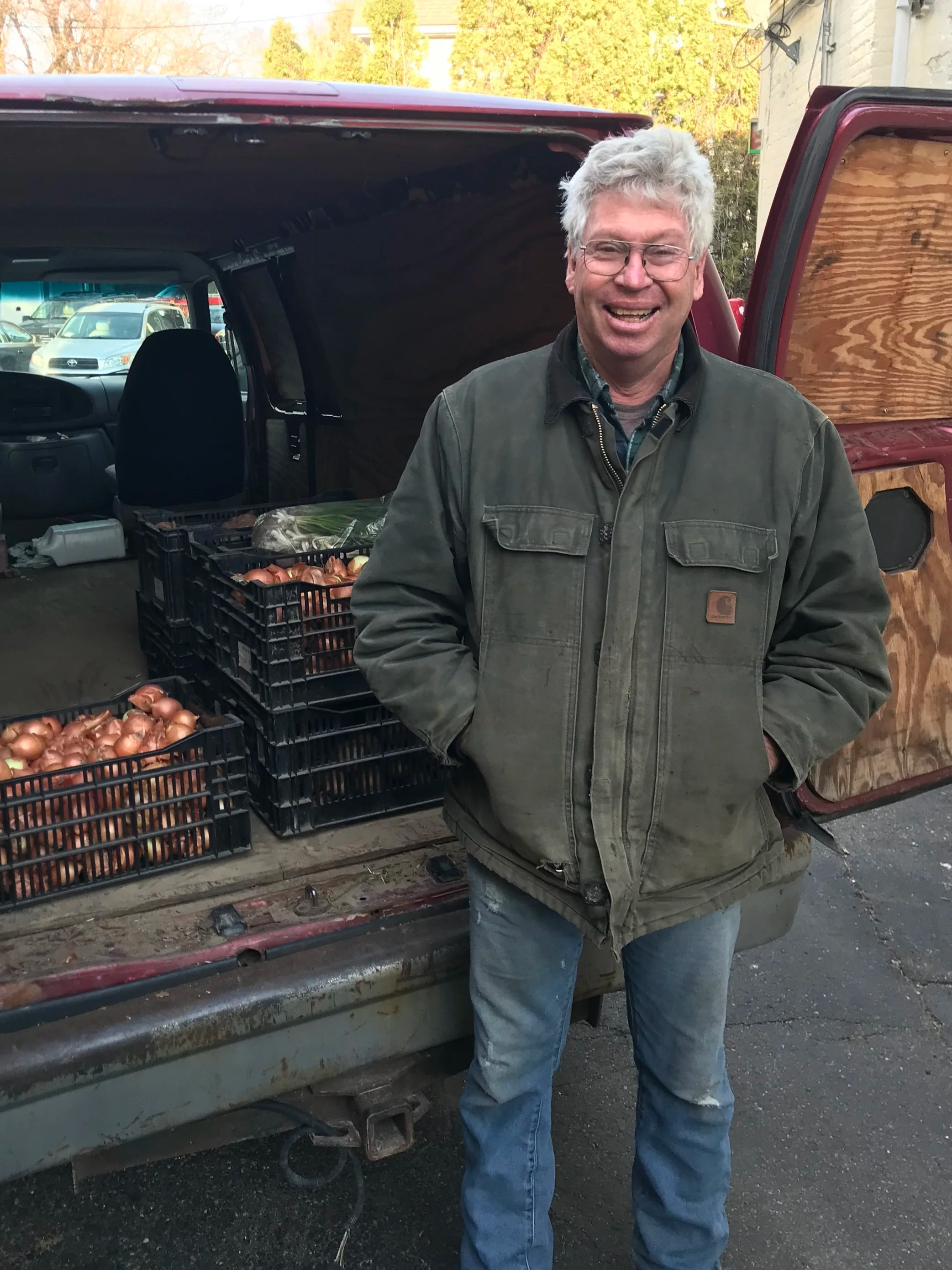
For farmers like Norm Holtz, winter is their busiest selling season. Holtz Farms, located in Ida, Michigan, relies heavily on sales of storage crops while Norm’s fields lie dormant under feet of snow. Potatoes, onions, leeks, and squash take center stage at Argus Farm Stop during the winter months, thanks to the investment Norm and other local farmers make in their crops long before they make it to our market.
Norm Holtz took over his family’s centennial farm in 1980. His family was growing grain crops at the time, but Holtz gradually transitioned into growing fruits, vegetables, and flowers. Holtz discovered these to be more practical choices in terms of the farm’s success, as they could better serve local farmers markets year-round. “In Spring there are tulips and daffodils. Summer brings green beans, tomatoes, and sweet potatoes.” Holtz shared that while he grows vegetables and flowers because of their practicality, they are also what he most enjoys growing.
Despite his passion for farming, Holtz reflects that he’s “probably the last one in the line,” after more than four decades caring for his family’s 40 acres of farmland. As Holtz has gotten older, he’s shifted his focus toward select fall and winter produce, otherwise known as “storage crops.” These crops are harvested at maturity and stored for extended periods of time without spoilage. They often have low moisture and thick skin, which allows them to keep well in tough conditions. Of these crops, Holtz grows and stores potatoes, squash, leeks, onions, and cold-resistant greens such as spinach. Holtz has been supplying Argus Farm Stop with these delicious and hardy vegetables for over a decade. In a climate where we spend half the year beneath feet of snow, storage crops often make all the difference for a local farmer to succeed until the next growing season.
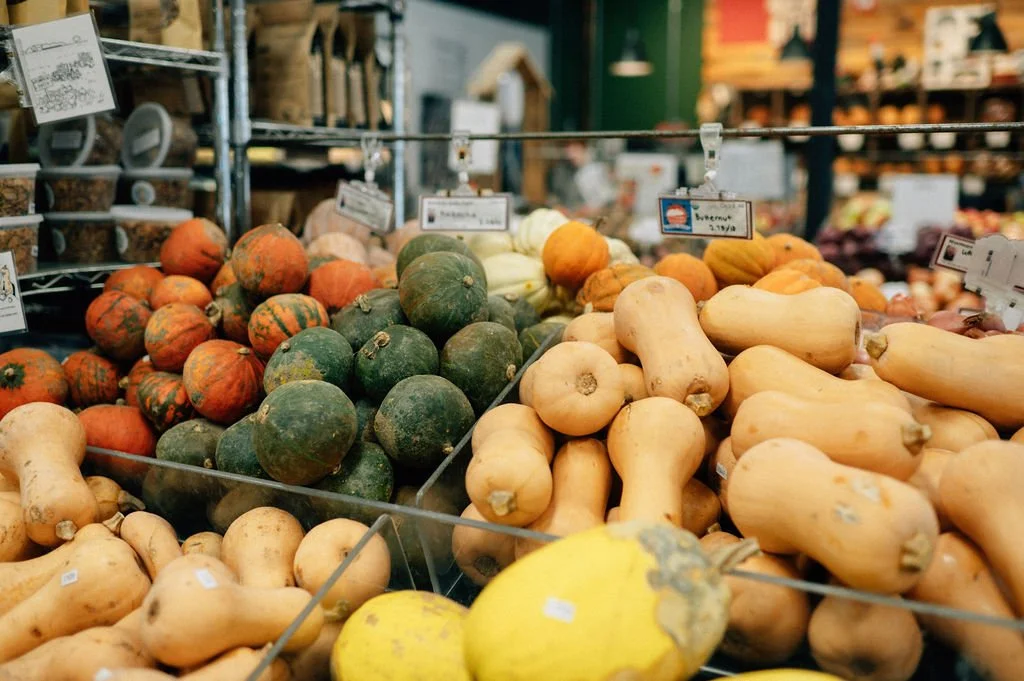
Regarding the difference between winter and summer crops, Holtz remarks “The growing process is the same. It’s a matter of what stores well.” While Holtz stores and supplies many crops through the winter months, he is probably most well known by Ann Arbor residents for his squash and potatoes. Both require their own unique curing process for long-term storage.
Most winter crops require cool environments for curing and storage, with winter squash being the exception. Winter squash grows in well-drained, warm soil under full sunlight for two to three months and is harvested just before the first frost. Once harvested, the squash is cured in a heated space for one to two weeks to allow ample time for rinds to harden, flesh to sweeten, and any cuts or bruises to heal. Holtz cures them in a large, heated room, which is kept at 80-85°F in high humidity. Once cured, Holtz stores them on the warmer side of his barn.
Potatoes, like most winter crops, require a cool environment for curing. The cultivation process for potatoes begins with planting potato seeds into well-drained soil in the springtime. Through the summer, the potato plants grow and flower, forming tubers underground. Similar to squash, potato harvest typically happens in late summer or early fall, before the first hard frost. Once Holtz digs up his potatoes, he begins the curing process. The unwashed potatoes are laid out in a single layer in a dark, well-ventilated room at high humidity for one to two weeks while their skins harden and any bruises on their surface heal. To keep out light, farmers typically cover them with a large tarp. This is the critical process that allows the potatoes to store through the long winter months.
Once cured, Holtz stores the potatoes in massive coolers in his barn to prevent them from shriveling or being exposed to light. Potatoes typically have to be kept at around 40-45°F to maintain their quality long-term. Norm has adapted his farm to accommodate both cold and warm curing processes, using what he “already had lying around” to reorganize and segment his barn into cool and warm sections. Holtz also keeps leeks, spinach, and other cold-tolerant crops on the cooler side of his barn.
While Holtz utilizes a cooler, some of our other local farmers at Argus Farm Stop utilize root cellars, another common food storage system. Root cellars are underground structures that are naturally insulated, maintaining 90-95% humidity. Because they are built below the earth’s frost line, they are temperature stable at around 40°F. They provide a naturally dark environment for the storage crops (which are typically sensitive to light exposure) with a ventilation system to maintain airflow and further prevent spoilage. Root cellars are commonly utilized and critical structures that allow local farmers to store and sell mass amounts of produce during winter. While some farms may use walk-in coolers instead of cellars, the principle remains the same for either system: maintaining cool and stable conditions for vegetables to preserve their quality, texture, and nutritional value.
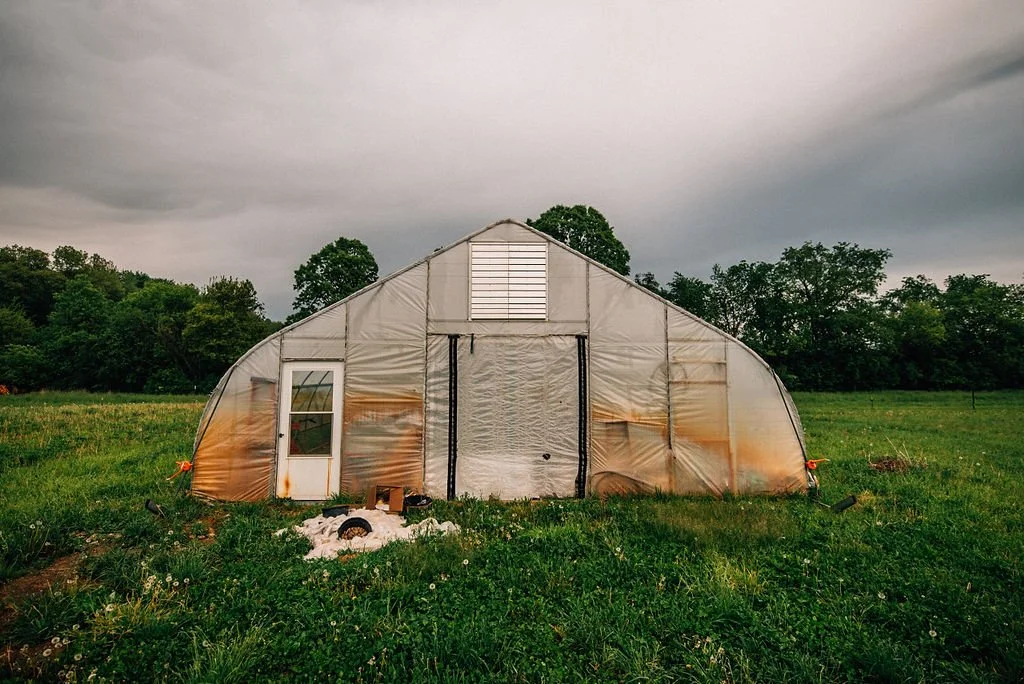
Another great structure, which Holtz utilizes, is a “hoop house.” Hoop houses are tunnel-like structures covered in a “poly covering” (which is a large UV-resistant plastic tarp). While root cellars serve as a storage space for vegetables, hoop houses actually extend their growing season, allowing local farms to grow crops into late fall. Solar energy passes through the poly covering of each house, creating a slightly warmer and more humid environment for the crops than the temperature outside. The structures also protect crops from harsh weather and frost. Holtz uses hoop houses to grow spinach and some other crops until late fall, when he transfers them for storage in his barn. The utilization of coolers, root cellars, and hoop houses is a demonstration of how much planning, organizing, and infrastructure it takes for local farmers to be able to consistently feed communities in colder climates, where growing food year-round isn’t an option.
While these structures are essential to ensuring we get fed during the dormant season, accessibility to local markets is just as crucial. You can find Holtz’s produce at farmers markets throughout Southeast Michigan, as well as at both Argus Farm Stop locations. Holtz Farms sells year-round directly from his farm on Saturdays, and also sells his produce at Eastern Market, the Ann Arbor Farmers Market, and farmers markets in Toledo. Having consistent winter sales allows farmers like Holtz to reinvest in infrastructure, whether that’s a larger cooler, a root cellar, or upgraded hoop houses. Winter revenue helps offset the upfront costs of these growing and storage systems and strengthens the local food economy. When customers shop locally in January and February, they are not just buying potatoes or squash, they are sustaining the systems that make winter produce possible. Buying locally makes for a “nice winter market,” as Norm puts it, and allows him to continue growing and supplying great vegetables for the community.
Though we may feel like dragging our feet through these last weeks of winter, it is important to acknowledge what is most important during this time of the year. What seems monotonous—the beige produce, grey skies, and ground covered in snow and slush—are actually the very elements of winter that remind us to rest and reconnect with our community. Winter produce allows us to create hearty, comforting soups. The grey skies give us reason to stay indoors and start crafts or creative projects. The sea of white beneath our feet makes every pop of color that emerges from the ground that much more interesting to behold. The brutality of winter forces us to be intentional, and reminds us of our roles in our community. While farmers like Holtz play the crucial role of keeping us well-fed through the most difficult time of the year, we at Argus Farm Stop are grateful to keep playing our role, serving as a space for Ann Arbor residents to access great local produce like Holtz’s.